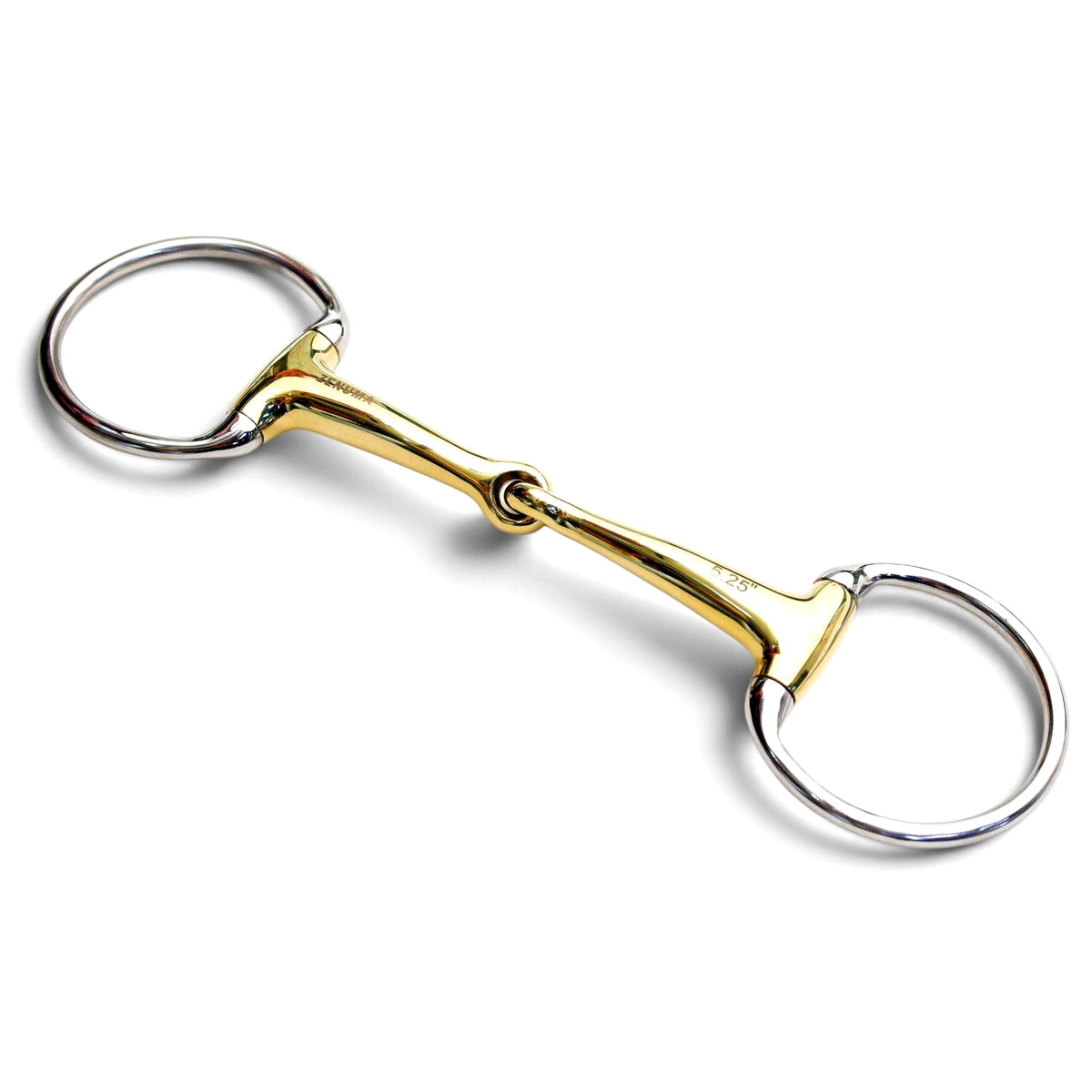
Article: The History of Horse Bits: A Story of Connection and Craft

The History of Horse Bits: A Story of Connection and Craft
Over 5,000 years ago, across the vast steppes of Central Asia, the earliest riders sought not dominance, but understanding. Using simple materials such as rawhide, they formed primitive loops and gently introduced them into the horse’s mouth. In doing so, they created something far greater than a tool—a quiet, responsive language built on pressure, release, and trust.
This moment marked the beginning of a partnership that would influence the course of human history.
As civilizations advanced, so too did the horse bit. Early designs crafted from bone and rope gradually evolved into bronze and iron, supporting riders in travel, agriculture, and warfare. What began as a functional necessity soon became a reflection of craftsmanship, status, and innovation.
During the Middle Ages, the development of curb bits allowed knights to control powerful warhorses with precision. However, these designs often emphasized control over comfort—an imbalance that would later inspire a shift in horsemanship philosophy.
That shift emerged during the Renaissance, when riding transformed into an art. Communication began to replace force, and riders developed a deeper appreciation for balance and refinement. The introduction of the double bridle symbolized this evolution—highlighting the idea that true control is achieved through harmony, not pressure.
With the rise of industrial innovation, materials such as stainless steel revolutionized bit-making. Durability, consistency, and precision became standard, laying the foundation for modern designs. Today, riders benefit from a wide range of materials and technologies, each engineered to enhance comfort, responsiveness, and clarity.
Yet the most important evolution has not been in materials—but in mindset.
Modern horsemanship is defined by balance. It prioritizes thoughtful communication, intentional pressure, and above all, the welfare of the horse. Riders today understand that effectiveness comes not from force, but from feel.
Every time you take the reins, you become part of this 5,000-year journey—a lineage of riders who sought not just to guide the horse, but to understand it.
Why This Legacy Matters
A horse bit is more than equipment—it is a language.
When used without awareness, it can create tension and resistance. When used with precision and respect, it becomes a refined channel of communication—subtle, effective, and powerful.
Understanding its history deepens the way we ride. It reminds us that every element—balance, weight, material, and design—plays a role in shaping the connection between horse and rider.
The Zenuma Philosophy
At Zenuma, this legacy is carried forward with purpose.
Each bit is designed to reflect centuries of learning, combining time-honored principles with modern engineering. Our focus remains on balance, clarity, and comfort—ensuring communication is precise without unnecessary pressure.
We do not simply follow trends—we refine them.
We believe the future of horsemanship lies in harmony, where performance and welfare exist together, not in compromise.
Because in the end, a bit is not about control.
It is about connection.